
X


The decision behind the savings target
The question is whether the assumptions behind it will hold.
Most savings plans don’t fail because the idea was wrong.
They fail because key assumptions weren’t tested early enough.
This validation is designed to help you decide:
which savings are safe to stand behind
which rely on assumptions that may not fully hold
where risk sits before execution begins
What this validation involves
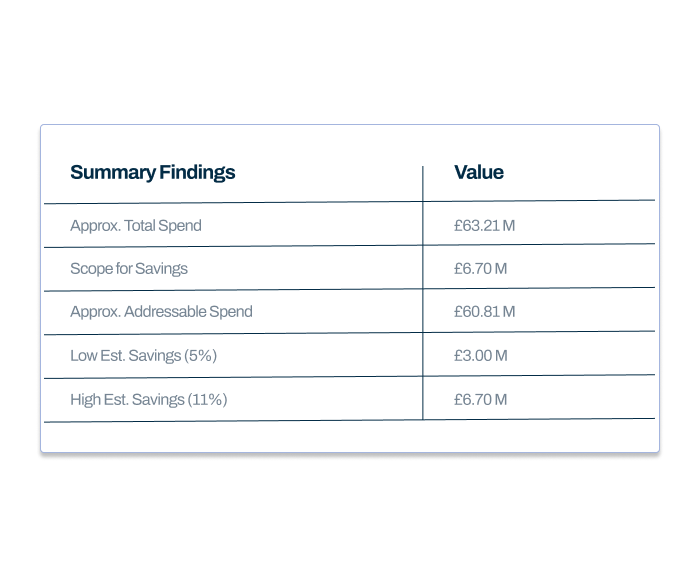
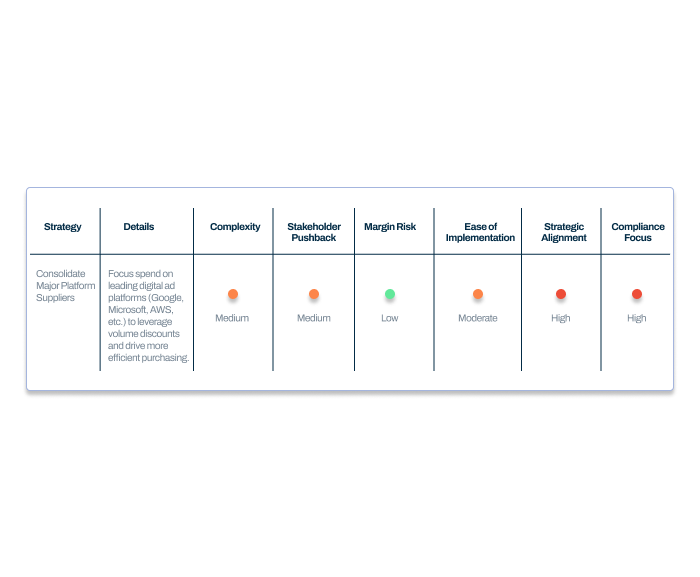
This validation is a short, focused review of the assumptions behind your savings target.
It is grounded in your actual context and looks only at the areas that affect whether those savings are likely to hold or where risk may sit before execution begins.
The purpose is not to analyse everything, start a programme, or produce a report.
It’s to bring clarity to which savings you can realistically stand behind before commitments are locked in.
In practice, this involves considering questions such as:
whether the categories driving the number are realistically capable of delivering the savings assumed
whether contracts and commercial terms support those savings in the timeframe required
whether invoicing and charging behaviour lines up with what the plan assumes
which assumptions feel solid and which depend on conditions holding
We focus only on what will actually move the number.
A few details help us make this useful.

Site by Strafe
