X


We’re bringing Commercial Control to the CPOnet Convention 2026
Identify, track and recover, protect.
Helping Procurement, Finance and Commercial see the margin exposure, on both sides of a contract, before they commit. That is the Commercial Control Layer.
You will also see where the value sits in your spend, and what you have overpaid or never billed.
Built for industrials, advanced manufacturing and infrastructure.
See it live at the CPOnet Convention 2026 | Stand 26
And hear Alex Grundy, Spendkey CEO, at 12:00 in Room 17: "Know if a deal makesmoney before you commit"
📍KinépolisCity of the Image · Lumière Space · Madrid | 21 October 2026
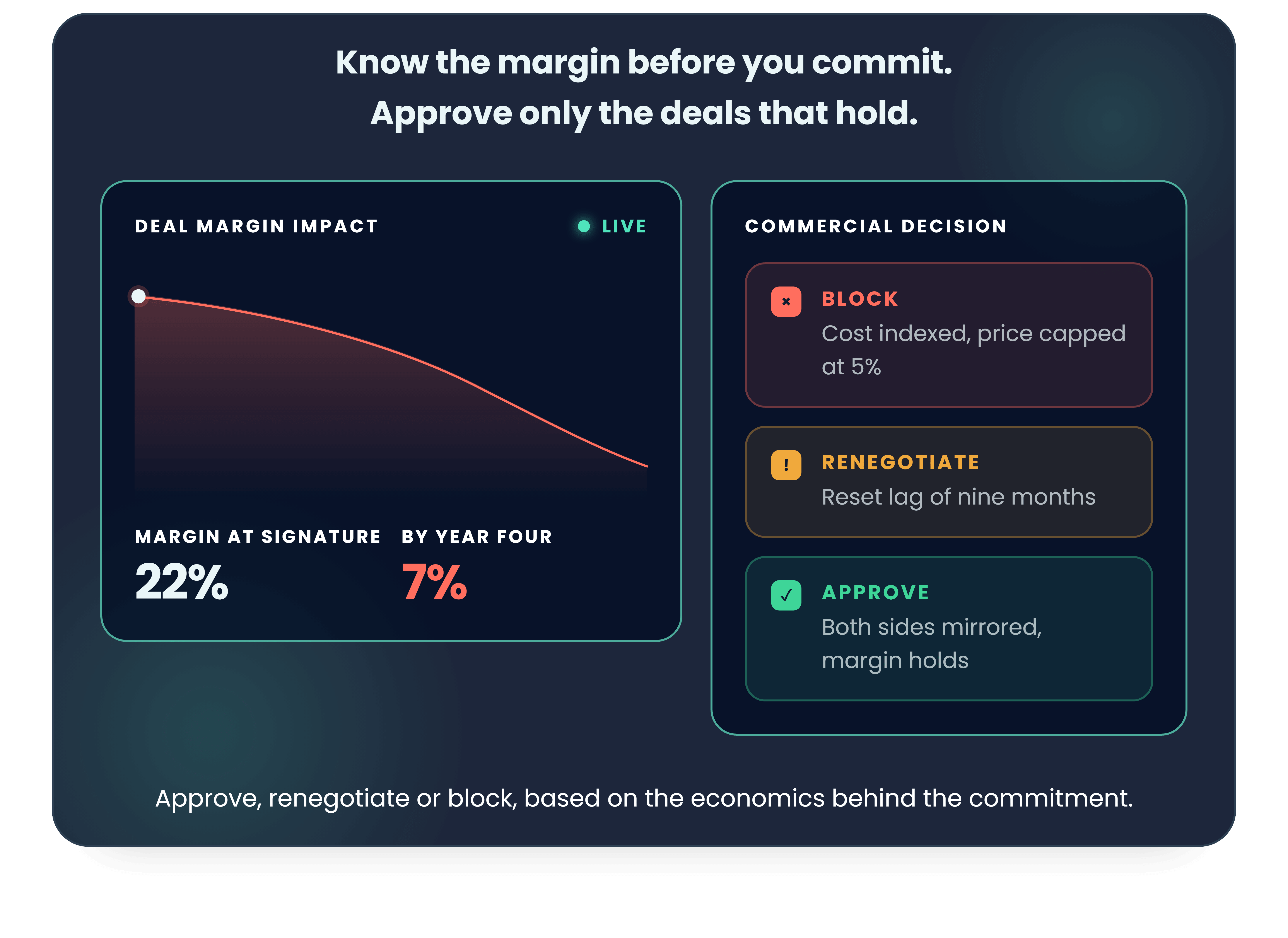

The commercial control gap
In industrials, advanced manufacturing and infrastructure, your price is fixed at bid, off an assumed cost build for the steel, the copper, the energy and the freight, and then it runs for the term. Your supplier contracts are shorter, and they move with the LME, TTF or Platts every month.
It runs the other way when the market falls, which is why the answer is not always bad news. Either way, it lands in EBITDA, not in anyone’s contract.

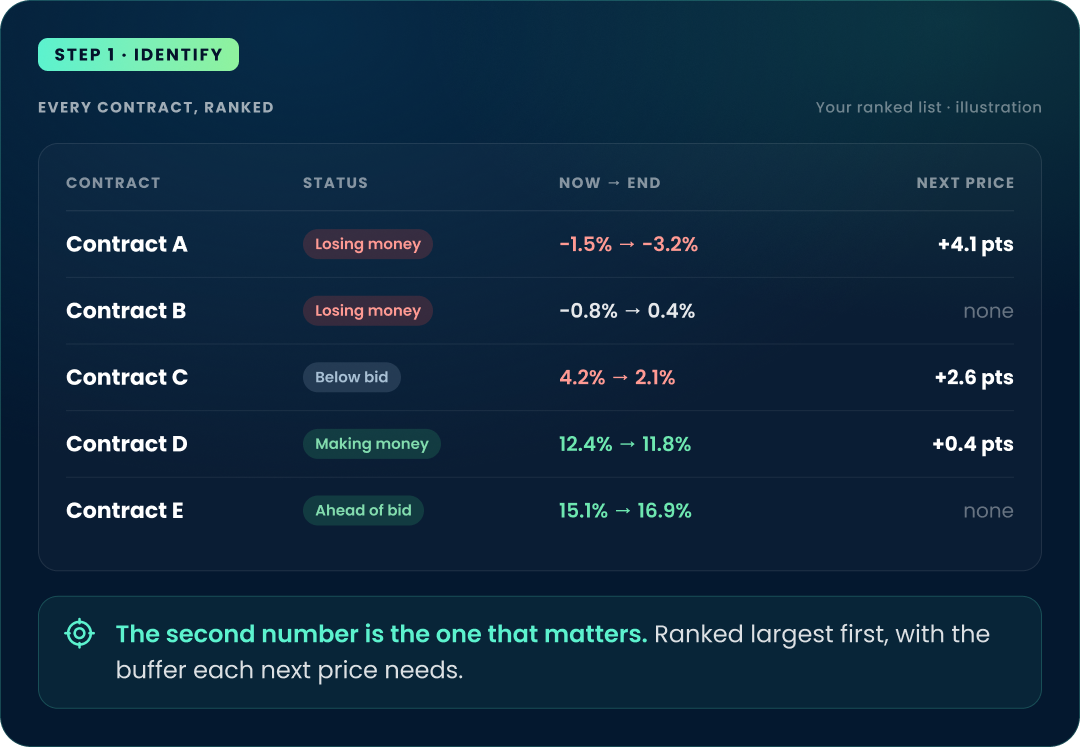
Step 1 · Identify
Both sets of contracts read together, so you can see where the margin the price was set to deliver has moved, on the customer side and the supplier side. On a five-year utility frame agreement, a rail supply contract or an EPC package, that gap can be years old before anyone measures it.
Read both sides
Your customer contracts and your supplier contracts together, the index each names, LME copper, steel, aluminium, TTF gas, Platts diesel, and its reset date.
Rank it
The savings and the margin exposures against customer contracts, largest first.
Price the next one
The buffer each price needs so the margin holds.
Step 2 · Track and recover
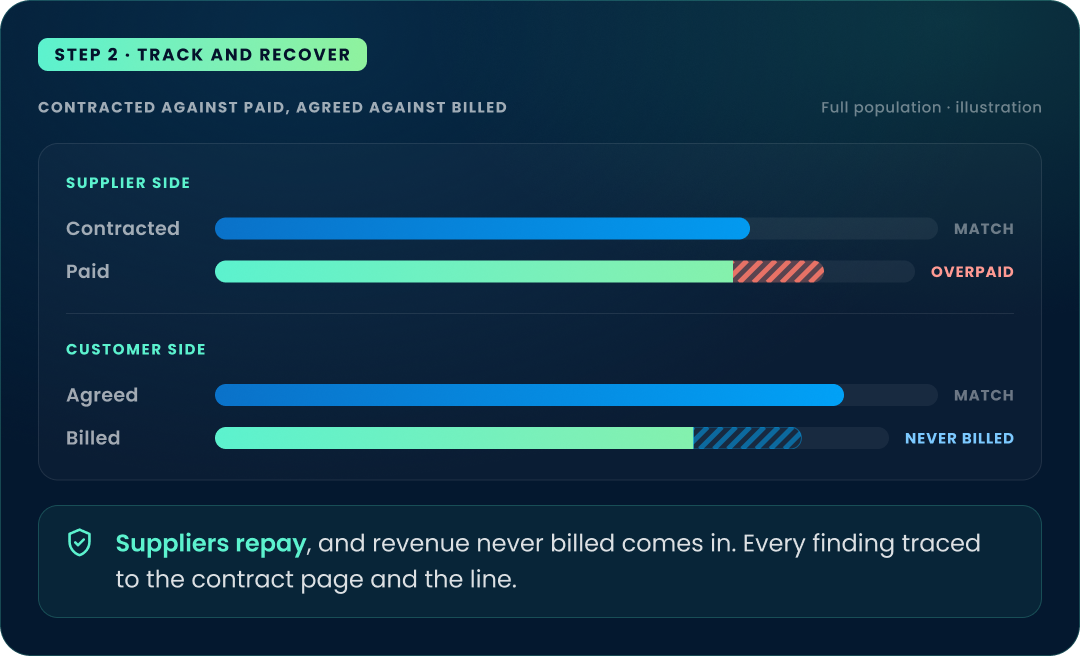
It confirms step 1 against what was actually invoiced. On indexed supply, the question is whether the supplier applied the index clause the way the contract says, and whether you passed through every increase your customer contract allows.
Check both sides
The supplier invoices you paid against the supplier contracts, and what you billed against your customer contracts.
Trace every finding
To the contract page and the line: the index reference, the lag, the cap, and the invoice that ignored it.
Get the difference back both ways
Suppliers repay, and revenue never billed comes in.
Step 3 · Protect
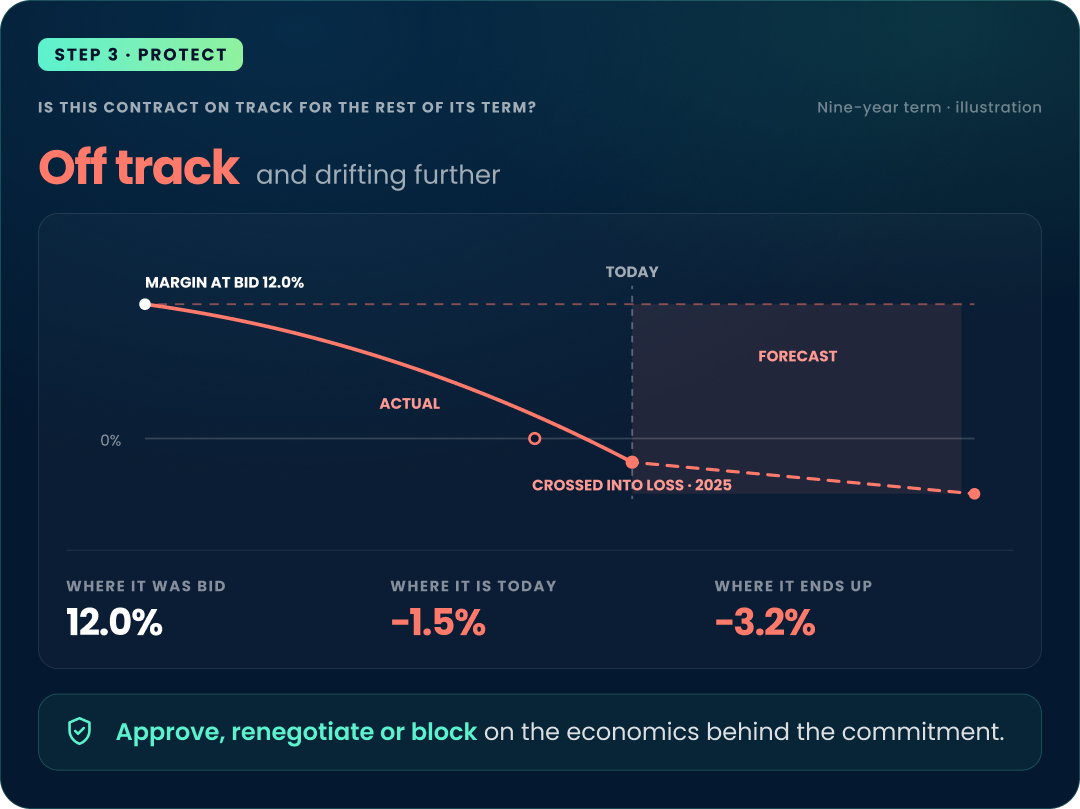
The rules are written on what steps 1 and 2 showed. Before the next commitment, the Commercial Control Layer reads the supplier contracts, the customer commitments, the pricing and the cost movements together, and puts a number on the margin exposure across the term.
See where margin moves
Index movements, reset periods, caps, volume commitments and contract terms, on both sides. Copper indexed monthly against a price capped at 3% a year is visible before signature, not at year three.
Simulate the term first
Run a policy in shadow, with nothing enforced. Best case, worst case and most likely, against the indices your contracts actually reference.
Control the decision
Approve, renegotiate or block on the economics behind the commitment.
PROVEN RESULTS
$5.3m recovered for clients
$13.6m caught before it was signed
1 to 3% of audited spend or billables recovered
Four weeks to the first ranked list
Our own figures across engagements.


Why meet us
Tell us what it is indexed to, and we will tell you on the spot whether the it is worth simulating.
Only hold the supplier side? Start there. We will show you your cost-side margin: where supplier costs have moved, what the contract supports, and where to challenge.Whether you want to see where price and cost have pulled apart, what you have overpaid or never billed, or how the next commitment gets checked before it is signed, book your 15 minutes below.
Slots are limited.
📍 CPOnet Convention 2026
Kinépolis City of the Image, Lumière Space, Madrid
21 October 2026
Stand 26, networking area · 08:00 to 18:00
Room 17 · 12:00 to 12:30
Join a session with Alex Grundy, Spendkey CEO: "Know if a deal makes money before you commit"

Site by Strafe
